About Clayton M. Christensen
Founder of the Clayton Christensen Institute · Harvard Business School Professor · Author of The Innovator’s Dilemma

Clayton M. Christensen (1952–2020) was one of the most influential thinkers in business and innovation of the modern era. Best known for developing the theory of Disruptive Innovation, Clay reshaped how leaders across industries—from technology and health care to education and global development—understand growth, competition, and change. His work offered more than explanation; it gave leaders a way to make better decisions in the face of uncertainty, especially during periods of rapid technological change.
Clay was also a co-founder of the Clayton Christensen Institute, established to ensure that rigorous theory could be used to solve the world’s most pressing problems. Today, the Institute continues that mission across education, health care, and global prosperity—guided by the same intellectual humility, moral clarity, and curiosity that defined Clay’s life and work.
From Practitioner to Professor
Teaching was not Clay’s first career. He’d been a Rhodes Scholar, a White House Fellow, a consultant, and a founder of a high-tech materials company in the first two decades of his professional life. In that time, he’d noticed a pattern of great companies thriving and then failing—often with the same management in place. What was it, he wondered, about “doing all of the right things” (per the brightest management minds of our day) that didn’t teach us enough about how to make success endure?
This was the central question he explored in his doctoral dissertation, and the one he further explored in his best-selling first book, The Innovator’s Dilemma.
In this short video, Clayton Christensen reveals how he developed Disruptive Innovation Theory
After earning his doctorate, Clay joined the faculty at Harvard Business School, where he taught for more than two decades. He quickly became one of the school’s most beloved professors—known not only for intellectual rigor, but for deep personal investment in his students’ lives and decisions.
Disruptive Innovation and the Power of Theory
Disruptive Innovation has been described as “one of the most influential business ideas of the 21st century.” Its impact reached far beyond academia, shaping how some of the most consequential leaders in the technology sector understood competition and growth. Innovators such as Steve Jobs, Andy Grove, and Jeff Bezos engaged deeply with Clay’s work, using its insights to question assumptions, anticipate market shifts, and think more clearly about long-term value creation.
Yet Clay himself was always quick to emphasize that the power of Disruptive Innovation lay not in prediction for its own sake, but in helping people make better decisions. He believed theory mattered precisely because it could help leaders interpret past data, anticipate future behavior, and act with greater confidence and humility.
Just as importantly, Clay actively sought out anomalies: cases where his theories didn’t quite fit. He welcomed critique from students, colleagues, friends, and strangers alike, seeing knowledge as a collective endeavor that improves through testing, challenge, and refinement. He also adapted and built upon the work of colleagues and scholars, recognizing the collective effort to advance knowledge.
Today, his work continues to guide decision-makers navigating rapid technological change, including the opportunities and challenges posed by artificial intelligence.
Disruptive Innovation remains one of the most widely taught and referenced frameworks for understanding technological change.
Scott Cook, co-founder of Intuit, and a director of eBay and Procter & Gamble, and Sal Khan, CEO of Khan Academy, explain how Disruptive Innovation has impacted their businesses and changed the way they think about innovating for the future.
Clay describes technology as either a disruptive or sustaining innovation, and what differentiates the two.
Beyond Business: Applying Innovation Where It Matters Most
Although Clay’s early work focused on business and technology, his later career increasingly centered on applying Disruptive Innovation to social systems that shape human opportunity and well-being.
His research and leadership influenced thinking in:
- Health care, by challenging prevailing cost and delivery models and advancing more accessible, patient-centered care
- Education, by questioning one-size-fits-all schooling and exploring how innovation could expand opportunity and personalize learning
- Global development, by reframing poverty alleviation around market-creating innovation rather than aid alone
Across these domains, Clay’s influence extended far beyond academia. Entrepreneurs, CEOs, policymakers, educators, physicians, and nonprofit leaders around the world credit his work with shaping how they understand both their strategies and their responsibilities.
What Clay Stood For
For all his professional accomplishments, Clay believed his most important work had little to do with business theory alone. He spoke often—and candidly—about purpose, integrity, faith, and relationships. To students and colleagues alike, he urged a long-term view of success: one rooted not in titles or accolades but in how we invest in others and live according to our values. He wrote about this in his book, How Will You Measure Your Life?
He was known for his warmth, generosity, and genuine interest in others. Whether in a classroom, a boardroom, or a one-on-one conversation, Clay had a rare ability to make people feel both intellectually challenged and deeply seen.
A Living Legacy
Clayton Christensen passed away in January 2020, but his ideas—and his example—continue to shape the world. The Clayton Christensen Institute, led by his family and colleagues, exists to steward, test, and extend his work: ensuring that Disruptive Innovation remains not just a powerful idea, but a force for expanding opportunity and human flourishing.
As Clay often reminded those around him, the ultimate measure of success is not whether an idea endures, but whether it helps others build something that truly matters.
Clay describes why—in business and in life—the more effective strategy is to invest in what matters most: relationships with loved ones that will inevitably constitute a greater reward than any profit margin or promotion.
Key Works by Clayton M. Christensen
Clayton Christensen’s legacy is best understood through the ideas he developed and refined over decades of research, teaching, and writing. This page brings together his most influential books and selected articles—works that introduced, expanded, and applied the theory of Disruptive Innovation across business, technology, health care, education, and global development.
Together, these books and articles form the intellectual foundation of Disruptive Innovation and remain essential reading for anyone seeking to understand how innovation shapes markets—and lives.
His work continues to be taught in universities, referenced by executives and policymakers, and applied by entrepreneurs navigating rapid technological change, including the opportunities and challenges posed by artificial intelligence.
Books
-

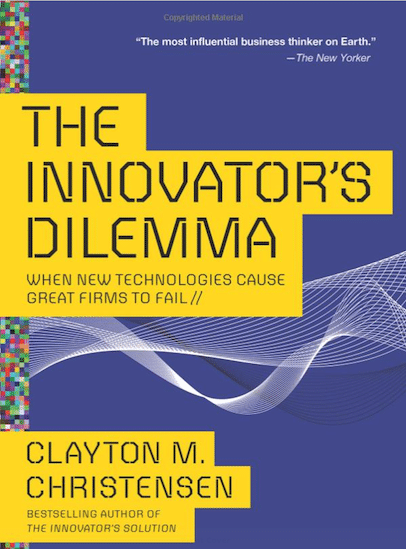
The Innovator’s Dilemma: When New Technologies Cause Great Firms to Fail (1997)
Clayton Christensen
Introduces the theory of Disruptive Innovation and first articulates the role of Modularity Theory in explaining why successful companies struggle to respond to technological change—showing how product architecture, organizational design, and market evolution shape competitive advantage.
-

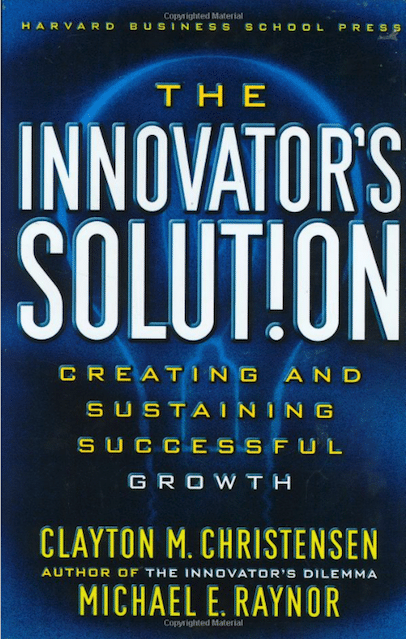
The Innovator’s Solution: Creating and Sustaining Successful Growth (2003)
Clayton Christensen, Michael E. Raynor
Builds on Disruptive Innovation by articulating a clear theory of business models, showing how value propositions, resources, processes, and profit formulas must align, and why Disruptive Innovations often require fundamentally different business models to succeed.
-

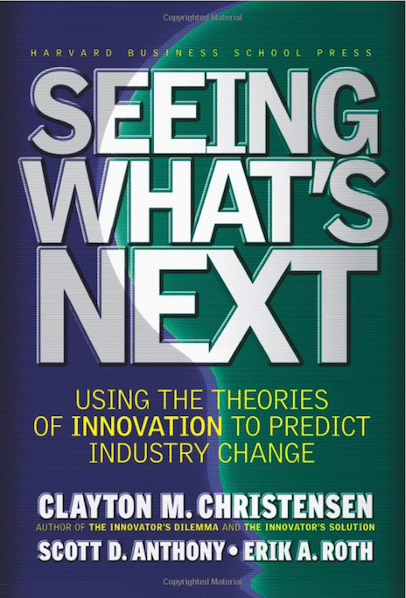
Seeing What’s Next: Using the Theories of Innovation to Predict Industry Change (2004)
Clayton Christensen, Scott D. Anthony, Erik A. Roth
Explores how to use theory to anticipate industry change, competitive threats, and strategic inflection points before they become obvious.
-

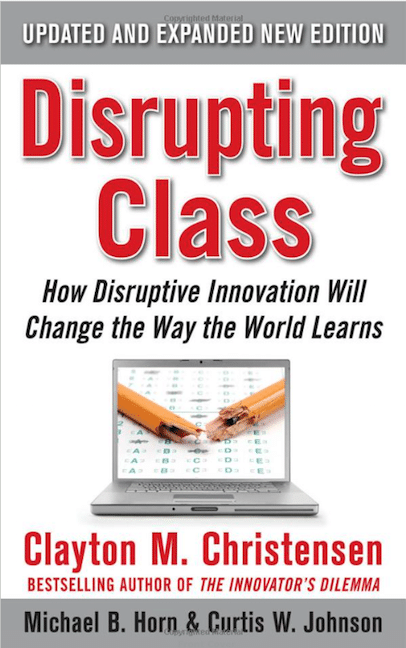
Disrupting Class: How Disruptive Innovation Will Change the Way the World Learns (2008)
Clayton Christensen, Michael B. Horn, Curtis W. Johnson
Applies Disruptive Innovation to K–12 education, arguing that technology-enabled, student-centered learning can expand access and improve outcomes.
-

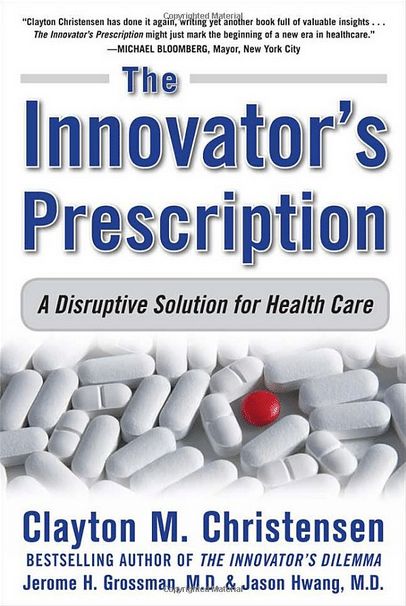
The Innovator’s Prescription: A Disruptive Solution for Health Care (2009)
Clayton Christensen, Jerome H. Grossman, Jason Hwang
Examines how Disruptive Innovation can make health care more affordable, accessible, and effective by redesigning care delivery models.
-

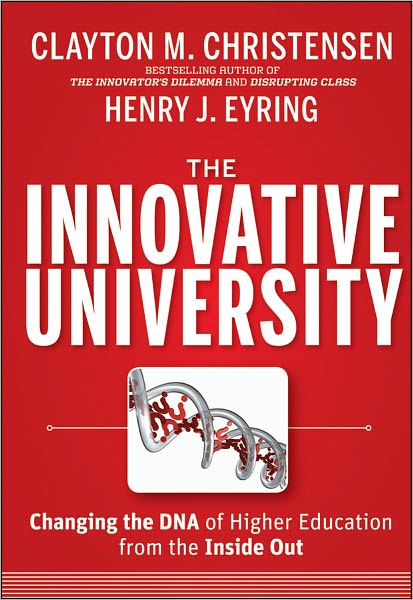
The Innovative University: Changing the DNA of Higher Education From the Inside Out (2011)
Clayton Christensen, Henry J. Eyring
Applies Disruptive Innovation and Business Model Theory to higher education, examining why traditional universities struggle to adapt—and how new institutional models can expand access, improve outcomes, and remain financially sustainable.
-

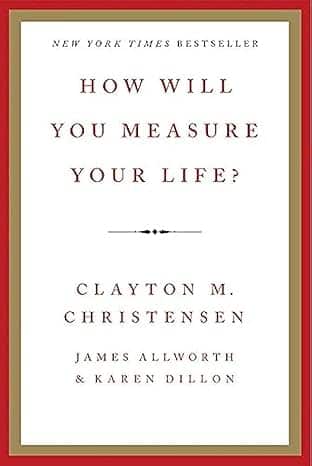
How Will You Measure Your Life? (2012)
Clayton Christensen, James Allworth, Karen Dillon
Draws on Clay’s research and life experience to explore how individuals can apply theory to build meaningful careers, relationships, and lives.
-

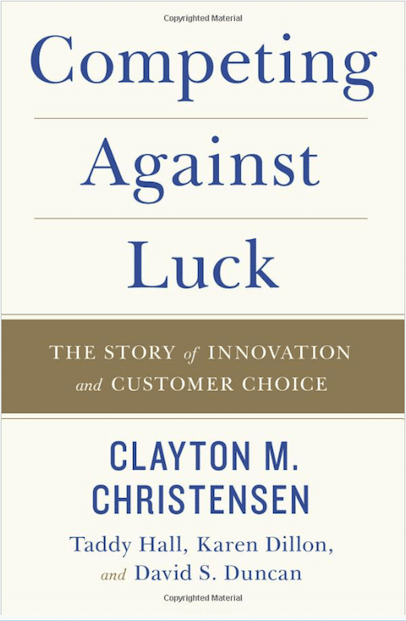
Competing Against Luck: The Story of Innovation and Customer Choice (2016)
Clayton Christensen, Taddy Hall, Karen Dillon, David S. Duncan
Introduces and formalizes Jobs to Be Done Theory, explaining how understanding the progress people are trying to make leads to better products, services, and innovation outcomes.
-

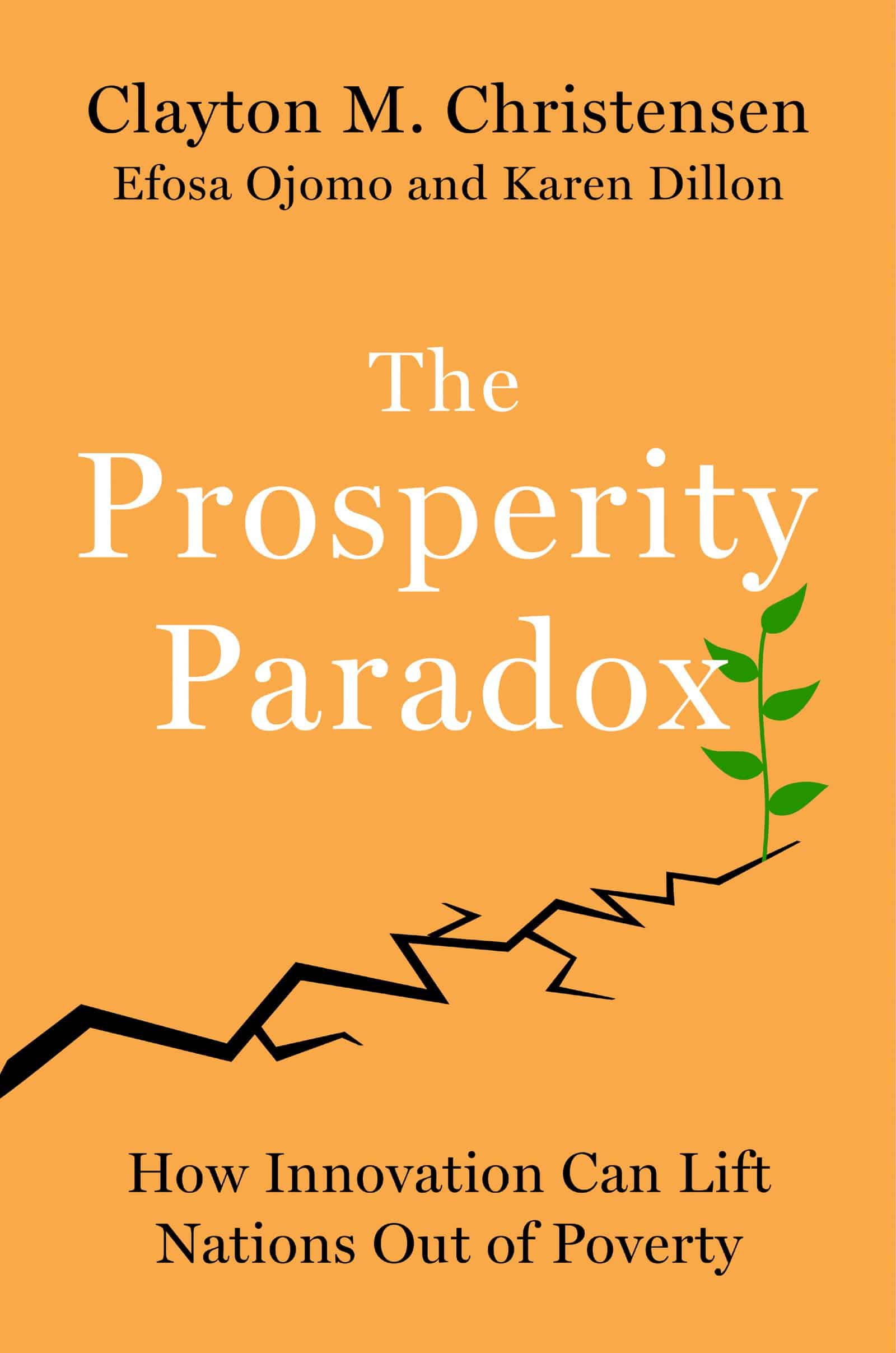
The Prosperity Paradox: How Innovation Can Lift Nations Out of Poverty (2019)
Clayton Christensen, Efosa Ojomo, Karen Dillon
Reframes poverty alleviation by arguing that market-creating innovation—not aid alone—is the most powerful driver of sustainable economic growth.
Selected Harvard Business Review (HBR) Articles
Clayton Christensen’s HBR articles distilled his most important ideas into clear, practical frameworks. The selected pieces below represent his most influential published articles, showing how his core theories were refined and applied across business, social impact, and innovation.
“Disruptive Technologies: Catching the Wave” (1995)
Joseph L. Bower and Clayton M. Christensen
Introduces early ideas that later became Disruptive Innovation, challenging assumptions about sustaining vs. disruptive technological change.
“Disruptive Innovation for Social Change” (2006)
Clayton M. Christensen, Heiner Baumann, Rudy Ruggles & Thomas M. Sadtler
Extends Disruptive Innovation Theory beyond business, showing how simpler, more affordable solutions can address persistent challenges in health care, education, and economic development.
“The Innovator’s DNA” (2009)
Hal Gregersen, Clayton M. Christensen & Jeff Dyer
Explores the behaviors and skills that distinguish innovative leaders, emphasizing questioning, observation, and experimentation.
“The New M&A Playbook” (2011)
Clayton M. Christensen, Richard Alton, Curtis Rising & Andrew Waldeck
Applies Business Model Theory to mergers and acquisitions, explaining why most deals fail and how aligning acquisition intent with integration strategy can improve outcomes.
“What Is Disruptive Innovation?” (2015)
Clayton M. Christensen, Michael E. Raynor & Rory McDonald
Clarifies common misconceptions about Disruptive Innovation and reasserts its proper definition and use.
“Know Your Customers’ Jobs to Be Done” (2016)
Clayton M. Christensen, Taddy Hall, Karen Dillon & David S. Duncan
Introduces the Jobs to Be Done framework, arguing that customers “hire” products and services to make progress in their lives—and that understanding those jobs is essential to effective innovation.