I teach a course at the Kellogg School of Management at Northwestern University called Entrepreneurship and Market Creation in Emerging Markets. As part of the course, students read short case studies and wrestle with difficult entrepreneurial and managerial decisions in emerging economies.
In one class, they read about a Mexican entrepreneur, Javier Lozano, who is working to solve the devastating problem of diabetes in Mexico. After we discuss the consequences of diabetes—suicide, amputations, depression, blindness, and the perpetual loss of hope—I ask the students a deceptively simple question: Should Lozano build a for-profit or a nonprofit company?
The responses are mixed. Many students argue that Lozano should build a nonprofit because the problem is too vast and the burden too heavy for the Mexican population for the solution to be delivered profitably.
After we exhaust the arguments on both sides, I introduce two simple, often overlooked, and critically important facts.
Every organization needs capital to operate
In today’s economy, no organization—public, private, or nonprofit—can operate without capital. Capital pays salaries, purchases equipment, and enables organizations to deliver value to customers or beneficiaries. Capital is to organizations what oxygen is to people. Without it, organizations die.
This does not mean the purpose of every organization is to maximize profit at the expense of its customers, employees, or suppliers. But it does mean every organization must have a deliberate and sustainable strategy for continually acquiring the capital it needs to survive.
Organizations get capital from only two sources
Organizations can access capital in many ways, but all of them ultimately reduce to two sources: investors and customers.
In nonprofit organizations, donors are investors. They may not seek financial returns, but they do seek social ones. Like all investors, they evaluate returns—financial or social—relative to their investment. These investors may provide equity-like funding, debt, or grants.
Customers, by contrast, exchange their own capital for value. They pay because the organization solves a problem they care about deeply enough to spend their scarce resources.
Once these two facts are clear, an unavoidable conclusion follows: when organizations choose to scale through nonprofit models, they also scale their dependence on donors. Whether intentionally or not, they bind themselves to the preferences, priorities, and constraints of their primary capital providers.
This is why even the most impactful nonprofit organizations are perpetually in search of capital. From the Red Cross to the World Food Programme, as these organizations scale their reach, they also scale their dependence. Moreover, nonprofits are rarely fully accountable to their beneficiaries—not because of ill intent, but because beneficiaries do not provide the capital the organization needs to survive.
Building and scaling nonprofits is many things. It is noble. It is compassionate. It is often necessary. But it is also structurally fragile. When donor capital is interrupted, scaled impact can disappear almost overnight. Recent shocks to donor funding have demonstrated how quickly large portions of global health and development infrastructure can unravel when capital flows dry up.
For-profit organizations are different
For-profit organizations are the most powerful engines we have to scale impact, dignity, and prosperity.
First: scaling impact.
I often ask my students—especially those who favor the nonprofit path—whether they can spell nonprofit without the word profit. No one ever can. The reason is revealing. Behind every scaled nonprofit sits a for-profit enterprise generating the surplus that makes the nonprofit possible.
Consider some of the world’s most influential foundations: the Gates Foundation (Microsoft and Berkshire Hathaway), the Mastercard Foundation (Mastercard), the Novo Nordisk Foundation (Novo Nordisk), and the Ford Foundation (Ford). The impact these institutions create is enabled by value first created through profitable enterprises.
There is no sustained, economy-wide scaled impact without for-profits.
Second: scaling dignity.
Delivering impact through nonprofits is good. It is unquestionably positive when children in rural communities receive malaria treatments or mosquito nets at no cost. But delivering impact through for-profits is better.
In their early stages, for-profit organizations rely on investors. But to survive, they must eventually persuade customers to part with their own capital. This forces organizations to listen, learn, and innovate relentlessly for the people they serve—many of whom are poor. Over time, customer capital replaces and surpasses investor capital, becoming the organization’s primary source of oxygen.
This transition scales dignity. People stop being beneficiaries and become customers, partners, and capital providers. They are no longer passive recipients of aid; they are the reason the system exists. They move from depending on lifelines to becoming the lifeline.
Third: scaling prosperity.
The ultimate goal of development should be to scale prosperity. Prosperity is sustainable problem-solving at societal scale. It persists because all participants—workers, customers, investors, and suppliers—are incentivized to keep the system alive.
The most prosperous countries in the world are not those with the most aid programs. They are those with the most productive and profitable companies.
The impulse to respond to deep poverty by building nonprofits is understandable. I have felt it. I have acted on it. I have failed at it. The problem is not that nonprofits are misguided or unworthy. It is that they are downstream of profit creation, not upstream from it.
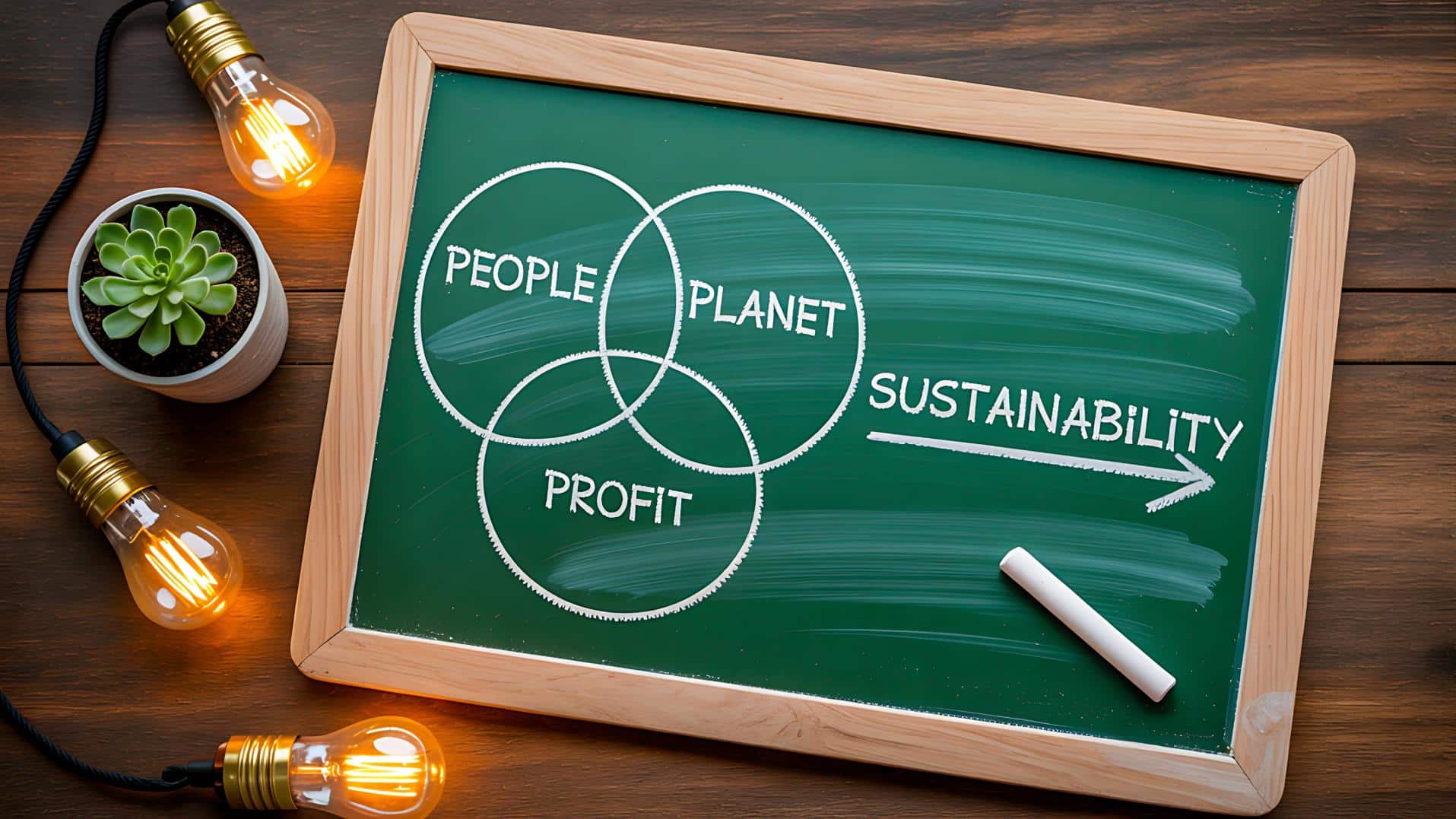
Profit need not be the only goal. But it is a prerequisite. If we are serious about solving society’s hardest problems at scale, we must discipline ourselves to build the engines that make that scale possible.
Lozano built a for-profit business that reduced the cost of treating diabetes by more than 80% and significantly increased the convenience patients experienced when accessing the service. His Clinicas del Azucar, a market-creating innovation, has inspired many copycats and served hundreds of thousands of people. He is scaling impact, dignity, and prosperity.
Some caveats
- Not all profit is created equal. Some for-profit organizations—and some nonprofits—extract value by exploiting power imbalances or their position as providers.
- Profit is not the same as exploitation. When earned by delivering more value to more people at lower cost over time, profit signals sustainable problem solving.
- A simple test for whether impact, dignity, and prosperity are being scaled together: Are more people gaining access, and is the organization becoming more productive at solving the problem?